
A group of lenders to educational technology (edtech) giant Byju's has told the firm that they're open to negotiations with the company to resolve litigation and other disputes, according to people familiar with the matter. However, they have told Byju's that they will not engage in the firm's proposal for one-on-one meetings, according to sources. Byju's recently filed a suit against US-based investment management firm Redwood to challenge the acceleration of the $1.2-billion Term Loan B (TLB) facility, and disqualify the lender for its "predatory tactics".

With inflation figures expected to be well within RBI's target, there may be room for further rate cut.

Given the dimensions, it is bound to have at least ripple effects across markets. Could ripple turn into cascade? asks Devangshu Datta.

If you are running a sweetmeat shop, will you manage a dairy for milk supply or buy milk from the market? Banks are running a dairy (which has its cost for processing milk), while NBFCs are buying milk from the market, observes Tamal Bandyopadhyay.

'India has entered an economic super-cycle driven by a housing cycle turnaround.'

Exuding confidence in sustaining the tempo of credit growth, public sector bankers said on Wednesday that consolidation in the public sector bank (PSB) space has given them a robust base to scale. The privatisation of PSBs can be done through divestment of government stake to a wider base of investors without haste. There is nothing to worry about at this point (high credit offtake) as underwriting standards and risk management are much better.

If there is a morality tale here, it is that debt and death spare no king.

With Deputy Governor Viral Acharya and another member Chetan Ghate voting for a status quo, RBI governor Shaktikanta Das and three others outvoted them for reduction in repo rate to 6.25 per cent from the existing 6.50 per cent.

'If you look at the order books of capital equipment companies or money deployed on the ground, there is forward movement in terms of actual investment by the private sector.'

Bajaj Finance's quarterly business update, coupled with around 24 per cent fall over the past six months, has turned risk-reward favourable for investors, observe analysts. They see up to 39 per cent upside in the stock, from a one-year perspective. Global brokerage CLSA, for instance, has upgraded the stock from 'underperform' to 'outperform' with an increased one-year target price of Rs 6,600 (vs Rs 6,000 earlier) as it believes the risk-reward has turned favourable for the counter, and there is scope for expansion if growth remains robust.

India's economy is projected to slow to 6.5 per cent in the fiscal year starting April but will remain the fastest growing major economy in the world as it fared better in dealing with the extraordinary set of challenges the globe has faced, the Economic Survey 2022-23 said on Tuesday. India's gross domestic product (GDP) growth of 6.5 per cent in 2023-24 compares with an estimated 7 per cent expansion in current fiscal year (April 2022 to March 2023) and 8.7 per cent in the previous year. Like the rest of the world, India too faced an extraordinary set of challenges in tightening financial conditions and supply chain disruptions from a prolonged war in Europe but "withstood them better than most economies", the annual document detailing the state of the economy said.

Following are the highlights of the Economic Survey 2022-23 tabled in Parliament on Tuesday

Encouraging results for PayTM (One97 Communications) for the 2022-23 financial year (Q4FY23) have led to a surge in the company's stock price, gaining nearly 5 per cent during Monday's trade. PayTM reported Q4FY23 revenues at Rs 2,330 crore, up 51 per cent on year-on-year (YoY) basis (13.2 per cent quarter-on-quarter or QoQ), led by monthly transaction user (MTU) growth of 27 per cent and average revenue per user or ARPU growth of 19 per cent YoY. MTU is defined as users with at least one transaction/month.

For the banking system a new cycle starts in FY2024. It's fraught with fresh challenges on asset quality and profitability, warns Tamal Bandyopadhyay.

These funds give the wealthy an option to invest in strategies that other equity products like mutual funds and portfolio management services cannot, says Nishant Agarwal.

Before considering reducing the freedom of private investors in the derivatives market, we need to check if the maladies in markets elsewhere exist in India, says Susan Thomas.

RBI Governor Shaktikanta Das kept the red flag on cryptocurrencies flying, warning that the next financial crisis can be triggered by private cryptocurrencies if such speculative instruments are allowed to grow.
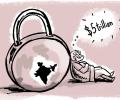
India is much better placed today to deal with future waves of the pandemic relative to the first wave, RBI deputy governor Michael Patra said.

The rupee declined by 10 paise to close at 79.23 (provisional) against the US dollar on Friday, tracking the strength of the American currency in the overseas market. At the interbank foreign exchange market, the local currency opened at 79.20 and finally ended at 79.23, down 10 paise over its previous close of 79.13. "Gains for the currency were short-lived even after RBI announced forex related measures. "Pound held on to its gains after Boris Johnson said he was quitting as prime minister following a rush of ministerial resignations and calls for him to go," said Gaurang Somaiya, Forex & Bullion Analyst, Motilal Oswal Financial Services.

While rising interest rates and tighter liquidity are giving negative signals for the financial sector, increasing economic activity could mean higher business volumes for lenders. Liquidity in the banking system has moved from Rs 8 trillion surplus into a deficit of Rs 33,000 crore over the 2022 calendar year. By the end of November, bank credit had grown 17.5 per cent YoY (year-on-year).

The Supreme Court on Thursday asked the Sebi to probe within two months allegations of stock price manipulation by the Adani group and any lapses in regulatory disclosures, and also set up a panel to look into protection of Indian investors after a damning report by a US short seller wiped out more than USD 140 billion of the conglomerate's market value. The top court while directing the setting up of a six-member committee headed by former apex court judge Justice A M Sapre for the assessment of the extant regulatory framework and for making recommendations to strengthen the process said it was appropriate to set up such a panel of experts in order to "protect Indian investors against volatility of the kind which has been witnessed in the recent past". The court-appointed Justice Sapre panel, which will be provided assistance by the Centre and other statutory agencies including the Sebi chairperson, will have to submit its report in a sealed cover within two months, said the bench which comprised Chief Justice D Y Chandrachud and Justices P S Narasimha and J B Pardiwala.

The government may have to resort, eventually and however unwillingly, to printing money, abandoned as policy and practice in the 1990, predicts T N Ninan.

Don't be surprised if growth in the second half of the financial year drops below 4%, which is where it was in the year before the pandemic, warns T N Ninan.

Assume that the rupee will trend lower over the next 10 years as India increases overseas sovereign exposures, and your long-term asset allocation should be geared to deal with this trend, suggests Devangshu Datta

The government plans to bring down its stake to 26 per cent in these two banks, which are yet to be identified. This may not come in the way of getting investors for these banks, provided the government is willing to step back rather than run them the way it had been doing for over five decades since these banks were nationalised, points out Tamal Bandyopadhyay.

Many emerging economies have witnessed a flight of foreign portfolio capital and their currencies have slumped against the dollar.

Benchmark stock indices opened the week on a muted note on Monday, with the Sensex plunging nearly 483 points due to selling in IT, capital goods and banking shares amid losses in global equities. The Sensex tanked 482.61 points or 0.81 per cent to settle at 58,964.57. During the day, it tumbled 552.78 points or 0.92 per cent to 58,894.40. The 50-issue Nifty declined by 109.40 points or 0.62 per cent to finish at 17,674.95 as 29 of its stocks declined.

SBI Research has projected the Indian economy to grow at 7.5 per cent in 2022-23, an upward revision of 20 basis points from its earlier estimate. As per official data, the economy grew by 8.7 per cent in FY22, net adding Rs 11.8 lakh crore in the year to Rs 147 lakh crore, the report said, adding this was however only 1.5 per cent higher than the pre-pandemic year of FY20. "Given the high inflation and the subsequent upcoming rate hikes, we believe that real GDP will incrementally increase by Rs 11.1 lakh crore in FY23. "This still translates into a real GDP growth of 7.5 per cent for FY23, up by 20 basis points over our previous forecast," SBI chief economist Soumyakanti Ghosh said in a note on Thursday.

If you are buying a bond to cater to your regular income needs, check the interest distribution schedule.

According to a senior police officer of the Thane police, Hasnain had borrowed around Rs 67 lakh from his close kin on various occasions under the pretext of doing business.

India's external debt stood at $554.5 billion at end-June, recording a decrease of $3.9 billion over its level at the end of March 2020, the RBI said on Wednesday. Further, the external debt to GDP ratio increased to 21.8 per cent at June-end 2020 from 20.6 per cent as on March 31.

'It's hard to call whether the Indian markets will go through a time or price correction.' 'There could be a swift 5 to 10 per cent fall in the market in the next two months or there could be a gradual fall and six months sideway movement.' 'Eventually, I think there will be a bit of both.'

Three-four big gem and jewellery firms are showing financial weaknesses and might find it tough to withstand shocks

The central government is on track to meet its fiscal deficit target of 6.4 per cent of the GDP for 2022-23 on the back of strong growth in revenue collections, the World Bank said in its India Development Update on Tuesday. High nominal GDP growth in the first quarter supported strong growth in revenue collection, especially Goods and Services Tax (GST), despite tax cuts on fuel. Notwithstanding an increase in spending due to expanded fertilizer subsidies and food subsidies for vulnerable households in response to the commodity price shock, the government is on track to meet its FY22/23 fiscal deficit target of 6.4 per cent of GDP and the general government deficit is projected to decline to 9.6 per cent from 10.3 per cent in FY21/22 and 13.3 per cent in FY20/21.

China's debt is dangerously high at close to three times its GDP, with the ratio having nearly doubled in recent years, observes T N Ninan.

The Reserve Bank's rate-setting panel will start its 3-day deliberations on Wednesday amid expectations of yet another rate hike of 50 basis points to check high inflation, in line with similar actions taken by other major central banks, including the US Fed. Based on the recommendations of the Monetary Policy Committee (MPC), the RBI had effected 50 basis points increase in repo rate each in June and August after raising the short-term lending rate by 40 basis points in an off-cycle decision in May. The MPC, headed by RBI Governor Shaktikanta Das, is scheduled to meet during September 28-30.

Indian corporate giants, Reliance Industries and Tatas are looking at the option of raising finances through the Japanese Depository Receipts route, a top Japanese minister said in Mumbai on Wednesday.

In the context of market integrity, the IRAI and RBI should go over the minutes of the LIC and SBI board meetings when the decisions to invest in Adani equity or debt were taken, notes Jaimini Bhagwati, former World Bank treasury professional.

RBI Governor Shaktikanta Das has assured Finance Minister Nirmala Sitharaman that the Rs 12.05-trillion gross borrowing programme for FY22 will go through smoothly.
'A strong foreign exchange reserve is the best safety net against global spillovers.'
 © 2026 Rediff.com - Advertise with us - Disclaimer - Privacy Policy - Sitemap - Feedback - About us - Terms of use - Grievances